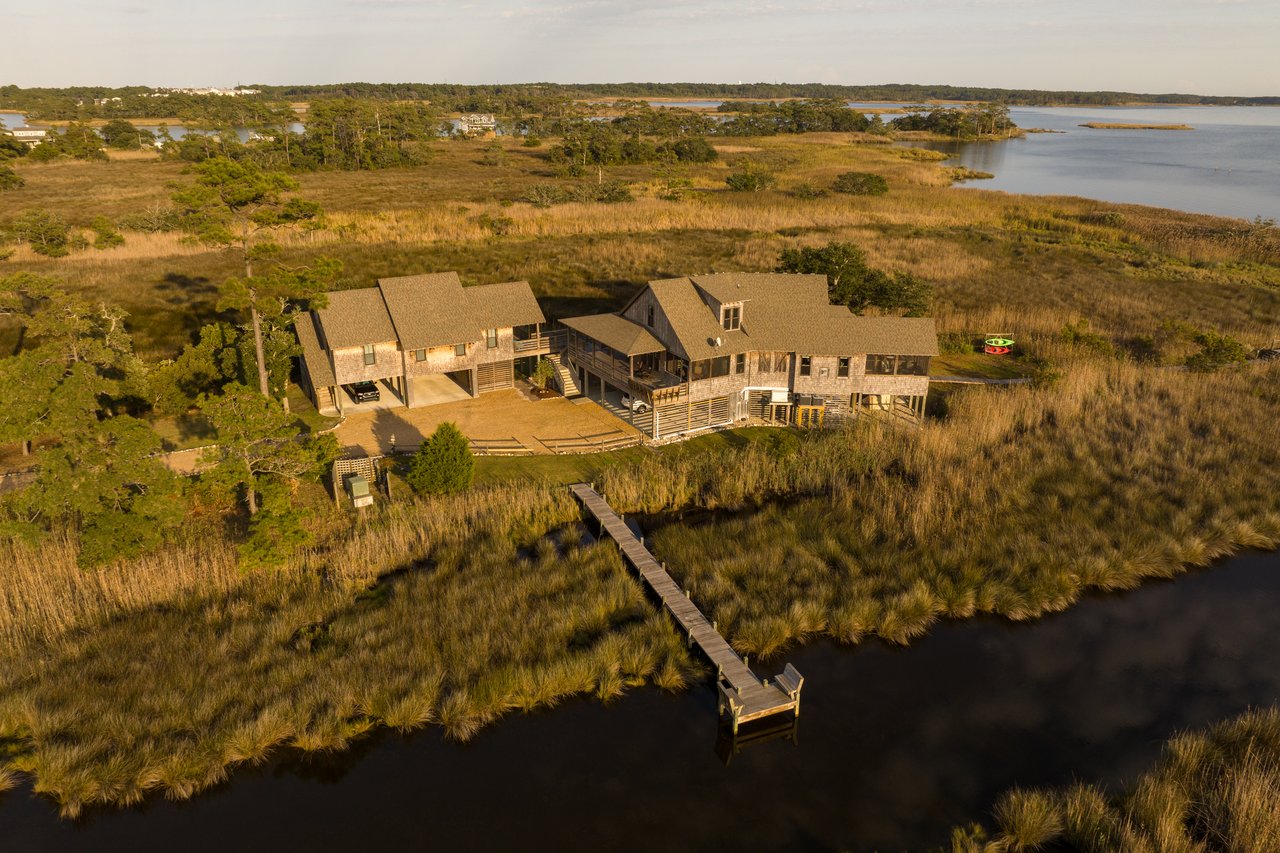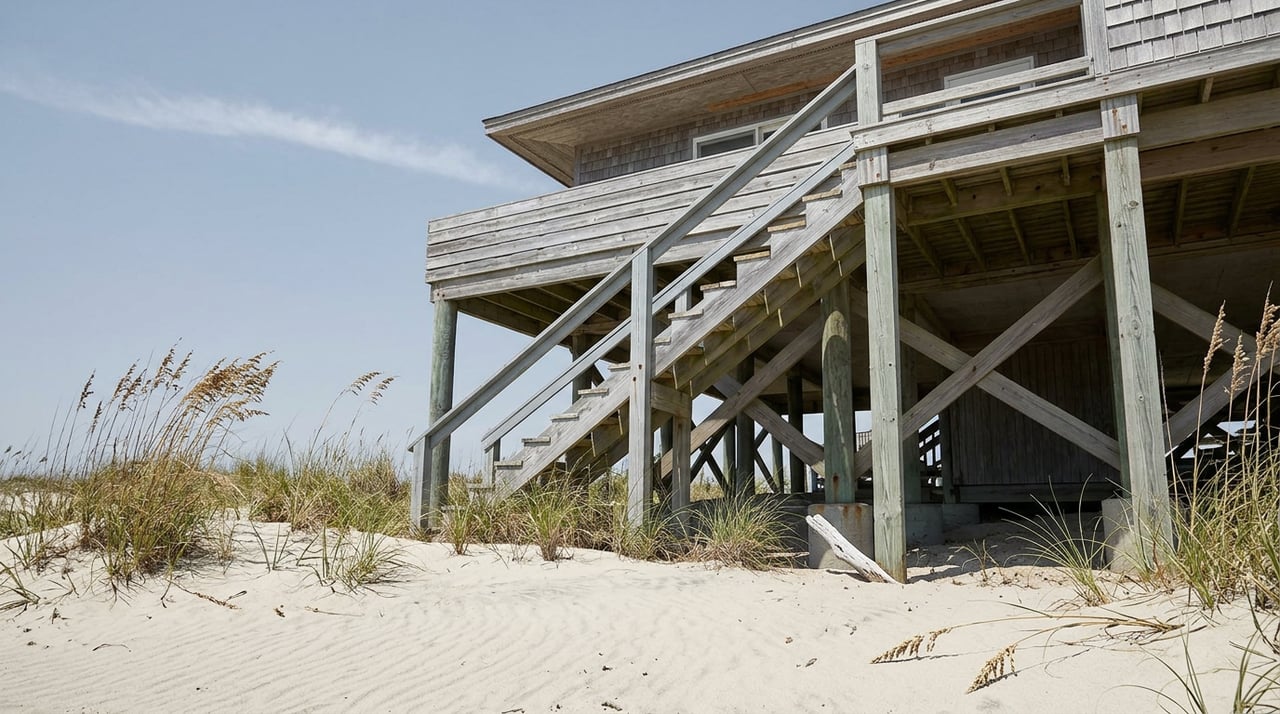
Walk the beach in Buxton or Rodanthe after a storm and you will eventually find one: a concrete box half buried in wet sand, pipe fittings poking up where a yard used to be, the ghost of a septic system that used to sit quietly behind a house. Since 2020, at least 31 homes in Buxton and Rodanthe have gone into the surf, and by early June 2026 the Dare County tracker listed at least 19 collapses in Buxton alone, most of them clustered along Tower Circle Road, Cottage Avenue, and Ocean Drive. The debris fields that follow are not just lumber and roofing. They are septic tanks, sometimes still holding wastewater, scattered across public beach.
If you are looking at oceanfront property on Hatteras Island, that image probably confirms something you already assumed: a compromised septic system is a hard stop. No approved system, no occupancy, no closing. That assumption is reasonable. It is also, in a specific and important way, wrong. The state's own rules give county health departments almost no room to deny a repair permit once a system meets the basic technical standard, even when the tank in question is sitting in the surf zone. The real risk on Hatteras Island oceanfront is not that you will fail to get a permit. It is that the system keeps getting permitted right up until the house itself gives out.
Why the County Almost Always Has to Say Yes
North Carolina's Department of Health and Human Services regulates the design, installation, and repair of septic systems statewide, including on the coast. Under the current framework, a septic system is treated as part of the house it serves, which means an oceanfront septic repair does not automatically trigger the same kind of gatekeeping you might expect for new construction seaward of the vegetation line. DHHS's own environmental health leadership has acknowledged that if a system meets the department's technical rules, the county has little authority to deny the repair permit, even when the system sits in an area regularly subject to tidal or storm overwash. Dare County's government has confirmed the same dynamic directly: if an owner can still access the building, the county is generally required to issue the permit.
That is not a loophole anyone is quietly exploiting. It is the plain text of how the system works. And it means the practical question for a Hatteras Island oceanfront buyer or seller is rarely "will this get approved." It is closer to "how many more times can this get approved before the house is gone."
The Eight-Year Clock That Rarely Finishes the Job
There is a rule that sounds like it should resolve this. Once a home is officially classified as imminently threatened by erosion, the property owner has up to eight years to relocate or dismantle it, unless it collapses or subsides first. In theory, that clock creates an orderly exit. In practice, the Buxton and Rodanthe collapse pattern suggests the storms usually finish the job long before the clock does.
Here is a sample of what that looked like in one six-month stretch, pulled from Dare County's own beach erosion record:
| Address | Village | Date Collapsed |
|---|---|---|
| 46006 Cottage Avenue | Buxton | October 18, 2025 |
| 46002 Ocean Drive | Buxton | October 28, 2025 |
| 46223 Tower Circle Road | Buxton | October 28, 2025 |
| 46003 Ocean Drive | Buxton | October 28, 2025 |
| 46016 Cottage Avenue | Buxton | October 28, 2025 |
| 46213 Tower Circle Road | Buxton | October 28, 2025 |
| 46201 Tower Circle Road | Buxton | February 1, 2026 |
| 46215 Tower Circle Road | Buxton | February 1-2, 2026 (overnight) |
| 46219 Tower Circle Road | Buxton | February 1-2, 2026 (overnight) |
| 46285 Old Lighthouse Road | Buxton | February 2, 2026 |
Ten houses in one stretch of Buxton, gone in two clustered events four months apart. None of them needed the eight-year clock to run out. The shoreline simply moved faster than the paperwork.
A 2023 Dare County study found Rodanthe losing roughly 15 feet of coastline a year, among the highest rates on the Outer Banks. When erosion runs that fast, the eight-year rule stops functioning as a safety valve and starts functioning as a description of how long a compromised system can keep getting repair permits before the storm makes the decision for everyone involved.
What the State Just Tabled, Again
If you were hoping regulators had already fixed this, they have not, at least not yet. The North Carolina Coastal Resources Commission has been circling amendments to the oceanfront septic rule for years, and as recently as its meeting last week, the commission tabled two proposed changes and pushed the discussion to October. Commission Chair Renee Cahoon has raised a question that gets at the heart of the problem: right now, a septic tank is valued as part of the house for repair-versus-replace purposes, and she has asked whether it makes more sense to value the tank on its own. Division Coastal Policy Analyst Cameron Luck told the commission that while Rodanthe and Buxton have produced the most visible examples, the underlying driver, continued shoreline erosion, is not unique to Dare County.
The proposed language would require a Coastal Area Management Act permit for any repair or replacement of a septic system on the ocean side of the vegetation line, while leaving routine maintenance alone. That distinction matters more than it sounds like it should. At an August 26 commission meeting in Manteo, Outer Banks Association of Realtors Government Affairs Director Donna Creef raised a concern directly relevant to anyone buying or selling on Hatteras Island: the draft rule does not clearly define what counts as a repair versus a replacement, which could lead CAMA officials to classify ordinary repair work as a replacement requiring a permit that a county health department would not otherwise require. Creef also asked the commission to limit the new provisions to work triggered by storms or erosion specifically, so a house that is otherwise safe to occupy is not swept into extra permitting because of an unrelated plumbing failure.
None of that has been resolved. The commission's own timeline points to October for the next round.
What This Means If You're Looking at Oceanfront on Hatteras
For a buyer, investor, or seller working with property in Rodanthe, Waves, Salvo, Buxton, Frisco, or Hatteras Village, the practical takeaways are less about whether a septic system will pass and more about what its history and paperwork actually say.
- Ask whether the property carries any occupancy tag or history of one. Dare County can disconnect electrical service and tag a home unsafe for occupancy if its septic system falls out of compliance with the state building code, and that history should surface well before closing, not after.
- Confirm the septic permit's bedroom capacity matches what is being marketed. North Carolina's own real estate regulator has flagged this repeatedly: a system permitted for three bedrooms cannot legally support advertising a fourth, and if the permit cannot be located, the responsibility shifts to checking tax records for the bedroom count on file.
- Treat the eight-year "imminently threatened" designation as a description of risk exposure, not a guarantee of time. Given the collapse pattern in Buxton and Rodanthe, a property can move from stable to gone in a single storm season regardless of where it sits on that clock.
- Watch the October Coastal Resources Commission meeting if you are mid-transaction on erosion-exposed oceanfront. A rule change affecting how repairs are classified could shift what counts as routine maintenance versus a permit-triggering replacement.
None of this means oceanfront on Hatteras Island is a bad decision. It means the diligence that matters most here is not the same diligence that matters on a soundside lot in Duck or a canal-front property in Corolla. The question is not whether the state will let you fix the septic system. It almost certainly will. The question is how many more storms this particular house has left to make that permission worth exercising.
Frequently Asked Questions
Does a septic repair permit on Hatteras Island oceanfront ever actually get denied? It can, but current DHHS guidance and Dare County's own statements make clear that if a system meets the state's technical rules, the county has little authority to refuse the permit, even for systems sitting in the surf zone.
Is this only a Hatteras Island issue? The Coastal Resources Commission's own staff have said Rodanthe and Buxton produced the clearest, most visible examples, but the underlying cause, ongoing shoreline erosion, is not limited to Dare County and could affect other oceanfront stretches of the Outer Banks over time.
What happens if the commission's proposed rule passes in October? The draft under discussion would require a CAMA permit for any repair or replacement of a septic system seaward of the vegetation line, while leaving routine maintenance work exempt. The exact line between "repair" and "replacement" was still being debated as of the commission's most recent meeting.
Should this change how I think about insuring or financing an erosion-exposed property? It should factor into how you evaluate the property's realistic time horizon, separate from what any single insurer or lender currently requires. A permit history and an occupancy-tag history tell you more about a specific house's trajectory than a general flood zone designation does.
If you are weighing oceanfront property on Hatteras Island, or trying to make sense of what a specific septic or permit history actually means for your timeline, Shane Collins and The OBX Island Guys Team can walk through the paperwork with you before you are standing in front of it at closing. Work With Us.